10x15cm, ~4x6in, ~A6: the go-to size for printing almost anything our phones can see. Readymade for frames, invitations, greeting cards, insta kiosks. Commercial to the core, like those Japanese watermelons grown cubed. But then, nothing feels less readymade than Ukrainian photographer Taras Perevarukha’s 10x15cm series.

It’s the feeling I get reading a great sonnet, for example. The tighter the formal grip, the more exciting the struggle toward meaning. The starlings in the photograph above make the same case with a sonnet logic of their own. A configuration mystifying and familiar all at once. But it’s when the birds bend, break, and reassemble that so much of the secret verges on epiphany (though it never quite gives the secret away).
The longer I look, the more I forget that I’ve already forgotten those familiar 10×15 constraints. And if these prints did nothing else, that sleight-of-hand would be enough.

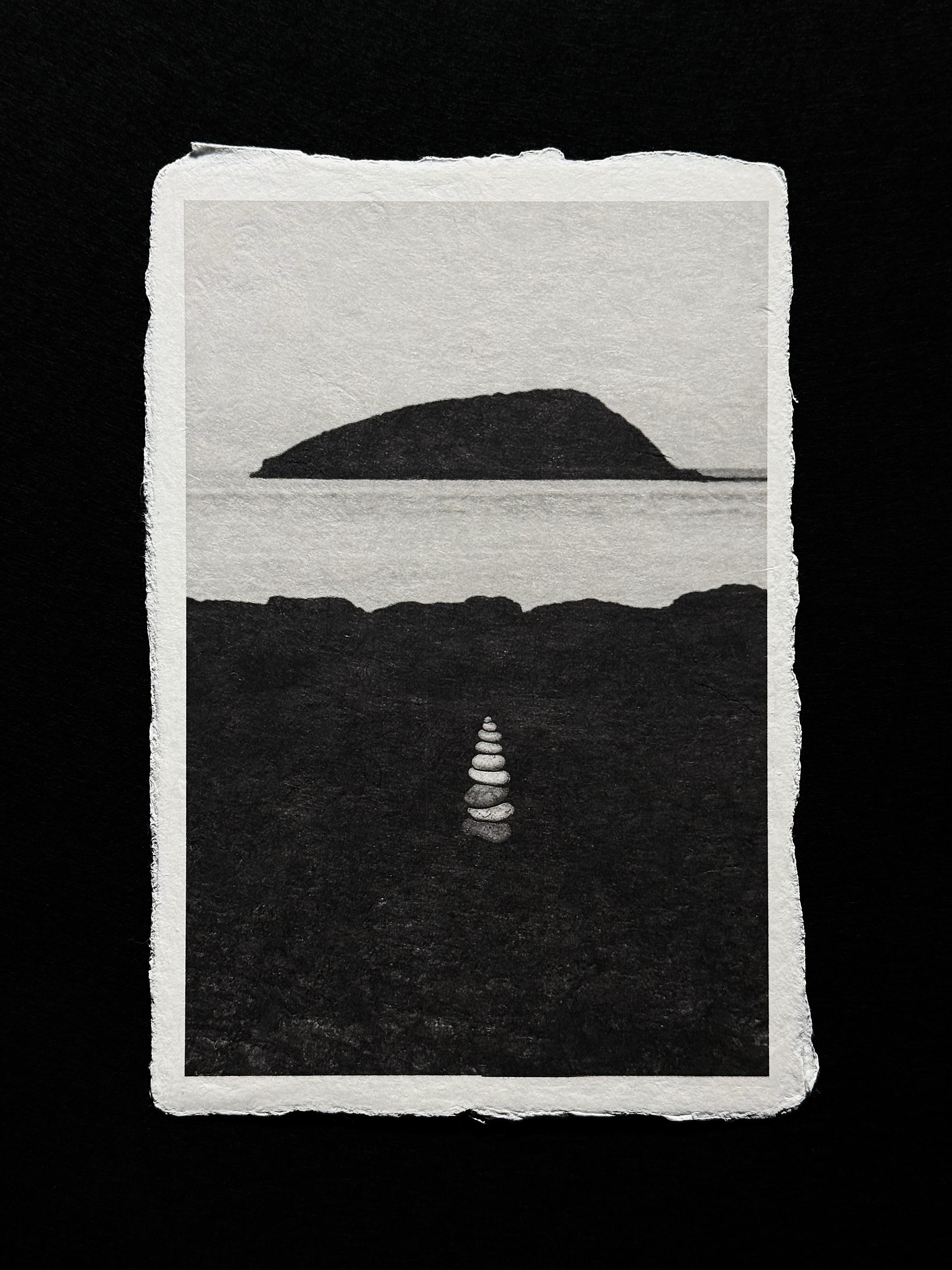
But they do, in fact, do something else. They draw attention to the photograph as “object,” says Perevarukha. The substrate—the material stuff inked over with haikus of water, branch, and leaf—is Japanese washi, a light but strong paper often handmade from mulberry pulp, whose fibers (you can see in this picture) give it a softness that captures something about the wave itself, like “thought,” says Perevarukha, “between rising and fading.”

For Perevarukha, washi “complements the photograph,” and I take the double-meaning. It’s not just a thoughtful arrangement of form and subject matter. It’s deference to an idea, to an experience.
Born in eastern Ukraine, Perevarukha relocated to Kyiv when the war broke out. That experience led to “Emptiness,” a project that, given the turmoil and disruption, looked for “stillness, pauses, and simple forms of presence” in villages whose ways of life were “on the verge of disappearing.” Again: deference.
Eventually, Perevarukha set up shop in the UK, where relentless “movement and change” concentrated the work further still on “perception of space, distance, and time.” What’s surprising, in that respect, isn’t the work’s preoccupation with what’s near or far; it’s the tranquility, the peacefulness that (once you understand the context) reads like a mantra against mayhem unseen.

And so I’ll sit for a moment longer with these sunflowers, photographed in the snowfields of Ukraine. I won’t think of them as matchsticks burnt cinder-thin, a summer warmth lost. I’ll think of them as a kind of script whose meaning, whatever that might be, upholds itself in the surrounding absence.

Check out more from Taras Perevarukha on his website and on instagram!